






Investing
Q4 Market Update: Tuning Portfolios for 2026
Senior Investment Specialist, Rebecca Cretney, shares Q4 2025 insights on how the turbulence of 2025 could lead to a more balanced position in 2026.
Filmed on Friday 9 January 2026.
Q4 2025 Market Commentary: a comprehensive breakdown of Q4 investment markets from our colleagues at Nedgroup Investments.
The final quarter of 2025 saw trade tensions and fiscal risks continue to dominate headlines, whilst central bank actions and geopolitics continued to shape the narrative as the year drew to a close.
On the trade front, October began with renewed friction between the US and China. President Trump threatened to impose a 100% tariff on Chinese goods from 1 November, alongside export controls on critical software. Initial fears of escalation eased after a Trump–Xi summit in South Korea produced an agreement to extend the tariff truce, reduce the fentanyl tariff, and postpone export restrictions.
Politics was in focus for Europe in Q4 after France’s Prime Minister Lecornu resigned and was swiftly reappointed. A pledge to suspend pension reform until after the presidential election allowed the government to survive two confidence votes. Nonetheless, rating agencies turned more cautious, with S&P downgrading France to A+ and Moody’s revising its outlook to negative.
Japan also jostled for attention with Sanae Takaichi’s election as LDP leader and subsequent appointment as Prime Minister in October surprising markets, as did the announcement of a substantial fiscal stimulus package in November. At the same time, the Bank of Japan continued its tightening path, delivering another rate hike in December, bringing the policy rate to 0.75%, its highest level since 1995.
In the US, signs of a weakening labour market continued to emerge, with unemployment climbing to 4.6% in November, its highest level in four years. Against this backdrop, the Federal Reserve delivered three consecutive rate cuts between September and December, totalling 75 bps. Meanwhile, speculation about future ECB tightening intensified after Isabel Schnabel signalled comfort with expectations for a hike in 2026. The ECB reinforced this stance by upgrading its growth and core inflation forecasts at its December meeting, adding to the sense that policy divergence could become a key theme in the year ahead.
Elsewhere, the UK budget announcement in late November drew attention. Pre-budget speculation around tax increases unsettled investors, but the final package was received positively, supported by stronger-than-expected fiscal headroom and a smaller gilt remit.
How has this translated to financial markets?
Given this backdrop, equities were well supported, with the global index up by +3.6%, with Japan (+9.6%) and the UK (+7.1%) leading the way, whilst the US (+2.3%) lagged. In terms of equity styles, value stocks (+3.8%) outperformed growth (+2.9%), and small-cap stocks (+2.7%) lagged large caps (+3.6%). There was wide variation in sector performance, with Healthcare (+9.9%) and Materials (+6.5%) being the strongest two sectors, while Consumer Discretionary (-0.5%) and Real Estate (-3.0%) lagged significantly.
Fixed income markets were positive supported by high starting yields. Looking at the details, global government bonds (+0.6%) finished the quarter above water, but lagged Investment Grade Credit (+0.9%), Global High Yield (+1.3%) and global emerging market debt (+1.8%).
In the real assets space, global real estate (-0.5%) and global infrastructure (+1.7%) diverged, with both lagging equity markets. Finally, Commodities (+5.8%) had a reasonable quarter with Gold (+12.2%) and Industrial Metal (+12.0%) being a clear stand outs, whilst Oil (-5.7%) struggled.
Author
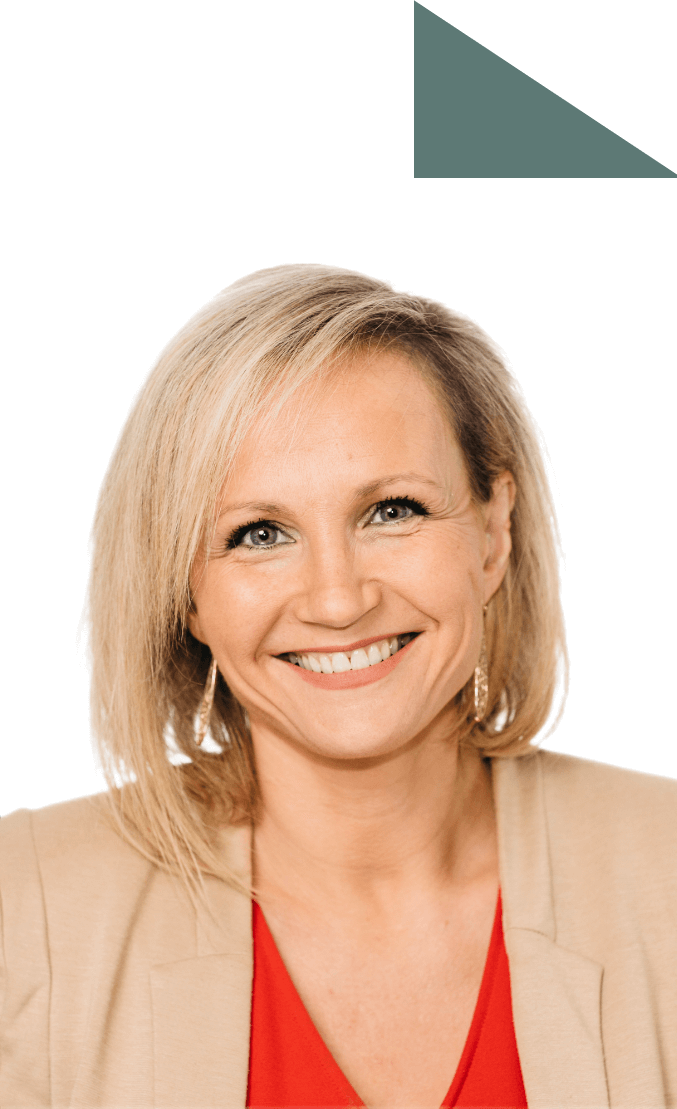
Rebecca Cretney
Senior Investment Specialist , Isle of Man
Rebecca joined Nedbank Private Wealth in May 2004 having moved to the Isle of Man from Barcelona to pursue a course in Business Studies with the Isle of Man Business School. She worked as a private banker until 2019, when she was appointed to the role of investment counsellor. Rebecca now focuses exclusively on supporting private bankers in conversations with their clients, providing technical investment expertise where more complex portfolio requirements exist. She also provides coaching and training for the private banking teams on a wide range of subjects surrounding investment and advice. In addition, Rebecca chairs the bank’s Investment Committee.
Rebecca is a Chartered Fellow of the Chartered Institute for Securities & Investment and a Chartered Wealth Manager.
RELATED NEWS
You may also be interested in the following Insights








Sign up for our updates
Stay up to date with the latest news, insights, and opinions from Nedbank Private Wealth by signing up to our newsletter. You can also register to be invited to our virtual events and hear directly from a wide range of experts. Sign up below. You can unsubscribe at any time.