






Investing
2025: A year of global transformation
As the curtain falls on 2024, we welcome a new year brimming with possibilities and challenges. 2025 is poised to be a year of transformation and continued innovation, with dramatic shifts in global politics, economic strategies, and market trends. The stage is set for an eventful journey, and market participants are watching with bated breath to see how these changes will unfold.
Political landscape
The election of Donald Trump marks a significant shift in US policy, driven by his ‘America First’ principles. This approach has two main components: non-interventionism and trade protectionism.
Non-interventionism during a time of conflict
The United States has often taken on a role of global leadership, intervening in international conflicts and promoting ‘democratic values’. But America’s role as world policeman is set to change under Trump, creating a vacuum which requires attention. Trump’s push for a ceasefire between Putin and Zelensky, while commendable, is unlikely to resolve the deeper conflict, leaving the situation volatile. The Israel-Iran War remains complex, with Trump’s support for Israel raising the risk of escalation. Additionally, the situation in Syria continues to be unstable. All of this has an inflationary effect, ultimately leading to higher commodity prices, with gold a good insurance policy against political risk.
Protectionism and the effect of tariffs
As we take steps back from a highly globalised economy, it is worth pausing to consider some of the more notable ripple effects. Trump’s protectionist policies are set to drive substantial changes in US foreign and domestic policies. He has pledged to impose significant tariffs on imports from Canada, Mexico, and China (25%, with an additional 10% for China). This has already led to change, which is set to continue into 2025. For instance, we have witnessed a surge in front-loading shipments to avoid the tariffs and a re-evaluation of supply chains, with some exporters exploring new markets and production centres outside of the US.
Additionally, US protectionism is contagious: there has been a ‘Made in China’ policy, but the EU is now also considering a “Europe First” strategy to protect its strategic business interests. To this end, Stéphane Séjourné, the EU’s new industry chief, advocates the bloc safeguards its strategic business interests, expressing concerns about Europe becoming collateral damage in a global trade war. It is interesting to note that the EU plans to focus on key sectors such as steel, car manufacturing, aerospace, and clean technologies to boost competitiveness and support the green transition.
Some Emerging Markets will be damaged by this protectionism, while others stand to significantly benefit, so it will be vital to show good judgement on asset allocation as a result.
Economic outlook
The level of change proposed by the world’s foremost economy always creates opportunity. Shake things up enough and new possibilities become apparent. Therefore, far from being wary of political uncertainties, we use the best expertise in the world to understand and maximise these opportunities.
We expect economic growth to remain resilient to these changes, although we would balance this by highlighting that the risk of policy error is rising and so could volatility, especially as valuations become more stretched.
Earnings growth is projected to remain robust, broadening out from the largest companies in the US to more cyclical sectors (those that traditionally perform well in strong economic conditions), or smaller companies, to which we have exposure.
Inflation has peaked but may take some time to reach central bank targets, although some of Trump’s policies on trade and migration will almost certainly have an inflationary impact. The OECD also advises central banks to be cautious with interest rate cuts due to persistent inflation in services and predicts global growth of 3.3% in 2025 and 2026, with rising protectionism and geopolitical conflicts as potential risks.
Finally, it would be remiss of us not to highlight another big change, which comes from China. The country announced a ‘moderately loose’ monetary policy and ‘more proactive’ fiscal policy for 2025, marking a shift from 14 years of a ‘prudent’ strategy.
This policy is likely to improve activity levels, with continued government stimulus expected over the next 12 months. Markets reacted positively to this, and it certainly provides momentum in the region.
Market dynamics
Investors will need to be patient and diversified given the elevated uncertainty and volatility levels.
Equities are expected to marginally outperform fixed income, which continues to offer attractive income levels and is therefore a key asset class to hold. A balanced approach is therefore recommended.
It will also be important to be selective within Emerging Markets, with some countries set to gain from a Trump presidency and others set to lose. And real assets such as gold, property or infrastructure are expected to provide positive returns and an attractive income stream, benefiting from inflation-linked cash flows and declining discount rates.
Conclusion
As we look ahead to 2025, it’s clear that the year will bring a mix of opportunities and challenges. The political landscape will be shaped by significant shifts in US policy, while the economic outlook remains cautiously optimistic. Investors will need to navigate a complex market environment and increased conflicts which could tip market sentiment, creating both risks and opportunities.
As Howard Marks stated, ‘Most people are driven by greed, fear, envy, and other emotions that render objectivity impossible and open the door for significant mistakes.’ That is why our robust investment process is purposefully designed to strip out emotion and shines a bright light on opportunities or risk mitigation strategies in 2025 and beyond.
Author
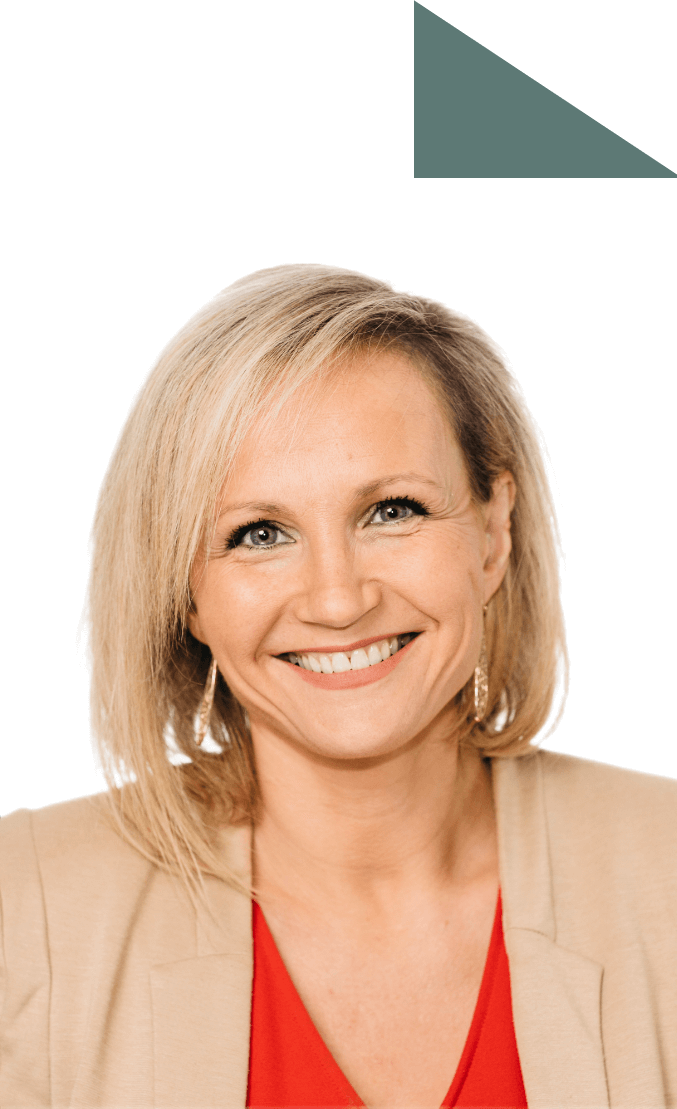
Rebecca Cretney
Senior Investment Specialist , Isle of Man
Rebecca Cretney is a Senior Investment Specialist at Nedbank Private Wealth, bringing over two decades of experience advising high-net-worth clients, trustees and families across sophisticated, multi-jurisdictional portfolios. She joined the firm in 2004 after relocating from Barcelona to attend the Isle of Man Business School.
Rebecca was a private banker for 13 years at Nedbank Private Wealth before becoming an Investment Specialist in 2019.
She now provides technical investment expertise to private banking teams across the Isle of Man, Jersey and the UK. Her focus includes shaping discretionary investment strategies, guiding complex portfolio structures and elevating the consistency and integrity of client advice, including supporting colleagues through the development and delivery of a structured training programme designed to reinforce best practice and advice integrity.
Rebecca is an active member of Nedbank Private Wealth’s Investment Committee and leads the bank’s philanthropy proposition, reflecting her longstanding commitment to responsible wealth stewardship.
A Chartered Fellow of the Chartered Institute for Securities & Investment and a Chartered Wealth Manager, Rebecca also holds PCIAM, Cert PFS and CeMAP qualifications. Her insights on sustainable investing, philanthropy and the evolving responsibilities of wealth holders are regularly sought, with contributions featured in publications such as the STEP Journal and Spear’s 500.
RELATED NEWS
You may also be interested in the following Insights








Sign up for our updates
Stay up to date with the latest news, insights, and opinions from Nedbank Private Wealth by signing up to our newsletter. You can also register to be invited to our virtual events and hear directly from a wide range of experts. Sign up below. You can unsubscribe at any time.